
Fatty Liver Disease (NAFLD/MASLD): What It Means and What You Can Do About It

Mohsen Halaby, MD
Board-Certified in Internal Medicine
Founder, Carebridge Medical
Serving Sylvania, Toledo, and Northwest Ohio
Fatty liver disease is extremely common—and many people who have it do not know it.
You may feel completely well, have only mildly abnormal liver enzymes, or discover fatty liver unexpectedly on an ultrasound or CT scan. But fatty liver can also be an important sign of underlying metabolic dysfunction, including insulin resistance, excess weight, high triglycerides, prediabetes, or type 2 diabetes.
What Is Fatty Liver Disease?
Fatty liver occurs when excess fat accumulates inside liver cells.
The condition traditionally called nonalcoholic fatty liver disease (NAFLD) is now commonly referred to as metabolic dysfunction-associated steatotic liver disease (MASLD). The newer name highlights an important point: for many patients, fatty liver is closely connected to metabolic health.
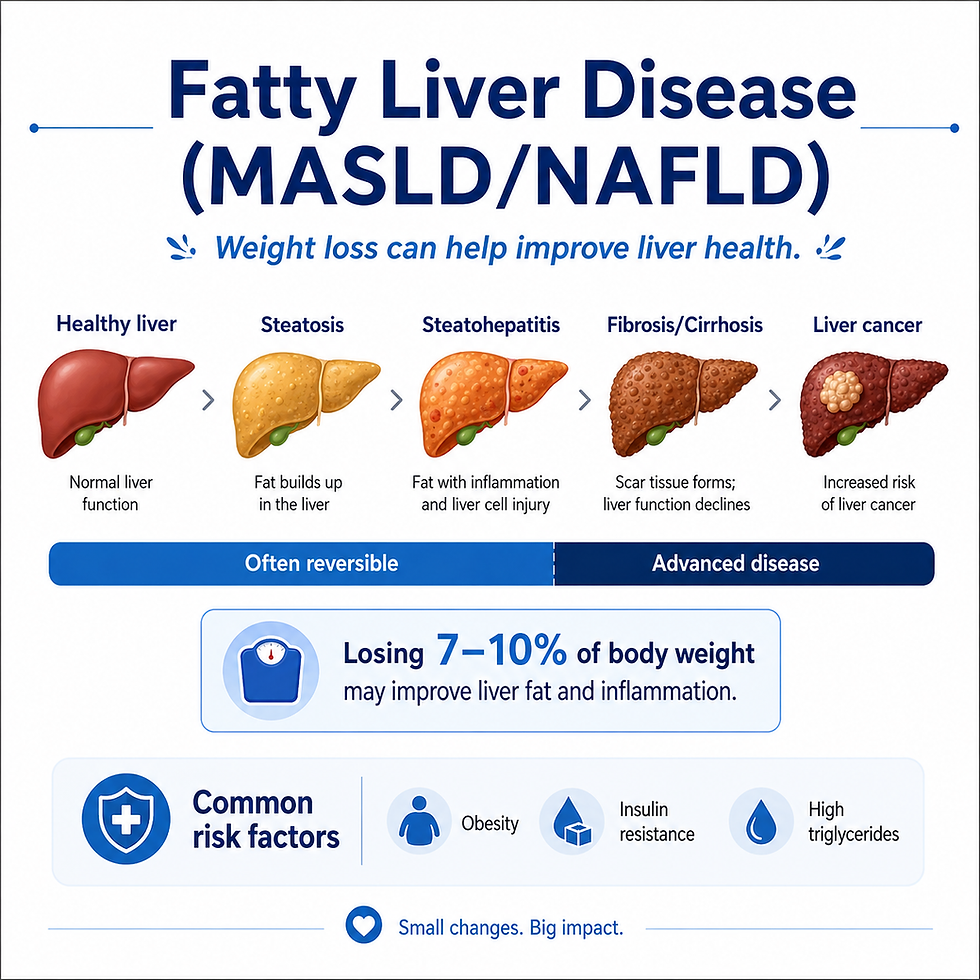
MASLD can range from relatively simple fat accumulation in the liver to a more aggressive condition involving inflammation and liver injury, called MASH (previously known as NASH). Over time, some people may develop fibrosis, cirrhosis, and other serious liver complications.
Who Is at Risk?
Your risk of fatty liver is higher if you have:
Overweight or obesity
Increased abdominal or waist fat
Insulin resistance
Prediabetes or type 2 diabetes
High triglycerides
Abnormal cholesterol levels
High blood pressure
Metabolic syndrome
The more metabolic risk factors you have, the greater the concern for progressive fatty liver disease.
Importantly, fatty liver can also occur in people who do not appear significantly overweight.
Fatty Liver Is Often Silent
One reason fatty liver is easy to miss is that it often causes few or no symptoms.
Some people may experience fatigue or vague discomfort in the right upper abdomen, but many patients feel completely normal.
Normal or only mildly elevated liver enzymes do not necessarily tell the whole story.
Why Should You Care About Fatty Liver?
The main concern is not simply the presence of fat.
In some people, liver fat is accompanied by inflammation and eventually fibrosis, or scarring of the liver. Advanced fibrosis may progress to cirrhosis.
Fatty liver also frequently occurs alongside cardiovascular and metabolic conditions. This means evaluating a patient with fatty liver should include more than simply looking at the liver—it is also an opportunity to address weight, blood pressure, cholesterol, glucose, and overall cardiovascular risk.
How Is Fatty Liver Evaluated?
Evaluation is individualized but may include:
Medical history and physical examination
Liver enzymes and other blood tests
Evaluation for diabetes or prediabetes
Cholesterol and triglyceride testing
Assessment for other possible causes of liver disease
Liver imaging
Noninvasive assessment of liver fibrosis
Tests such as ultrasound can identify liver fat, while additional testing may help determine whether significant liver scarring is present. In selected cases, a liver biopsy may still be needed.
Your clinician may also calculate a fibrosis risk score using routine laboratory results and your age to help determine whether additional testing is appropriate.
Can Fatty Liver Be Reversed?
Often, yes—especially when it is identified early.
Lifestyle and metabolic improvements can significantly reduce the amount of fat in the liver. For people with overweight or obesity, even modest weight loss can make a meaningful difference.
Losing approximately 3–5% of body weight may reduce liver fat, while greater weight loss—often around 7–10%—may be needed to improve inflammation and fibrosis. Physical activity can provide benefits even when significant weight loss does not occur.
The goal should usually be gradual, sustainable weight loss rather than crash dieting.
What Should You Eat?
There is no single “fatty liver diet.”
A sustainable eating pattern emphasizing minimally processed foods is generally more useful than a temporary restrictive diet.
Consider focusing on:
Vegetables and fruits
Whole grains and high-fiber foods
Lean sources of protein
Fish
Nuts and seeds
Unsaturated fats
Smaller portions when weight loss is needed
At the same time, reducing excess calories, highly processed foods, saturated fats, and added sugars—particularly sugar-sweetened beverages—can support both liver and metabolic health.
Exercise Matters Even Before the Scale Changes
Regular physical activity can improve metabolic health and may benefit fatty liver even without major weight loss.
A combination of aerobic exercise and resistance training is a practical approach for many patients.
The best exercise program is ultimately one that is safe, realistic, and sustainable.
The Bigger Picture: Treat the Metabolism, Not Just the Liver
Fatty liver should not be viewed as an isolated liver problem.
For many patients, it is a metabolic warning sign.
That means treatment may involve addressing several factors together:
Weight • Blood sugar • Insulin resistance • Cholesterol • Triglycerides • Blood pressure • Nutrition • Physical activity
Improving these areas can benefit not only your liver, but your overall long-term health.
When Should You Talk to Your Doctor?
Consider discussing fatty liver with your healthcare professional if:
An ultrasound or CT scan showed fatty liver
Your liver enzymes are persistently elevated
You have obesity or significant abdominal weight
You have prediabetes or diabetes
Your triglycerides are elevated
You have metabolic syndrome
You have a family or personal history of liver disease
Finding fatty liver early gives you an opportunity to evaluate your risk and intervene before significant liver damage develops.
The Bottom Line
Fatty liver disease is common, frequently silent, and closely connected to metabolic health.
The good news is that it is also a condition where early lifestyle and metabolic intervention can make a substantial difference.
If you have been told that you have fatty liver—or you have metabolic risk factors and are wondering about your liver health—talk with your healthcare professional about whether additional evaluation is appropriate.
This article is for general educational purposes and does not replace individualized medical evaluation, diagnosis, or treatment.
Concerned about fatty liver or your metabolic health?
Learn more about Carebridge Medical’s approach to primary care, weight management, and metabolic health, or schedule an appointment at Carebridge Medical.
This article is for general educational purposes and does not replace individualized medical evaluation, diagnosis, or treatment.


Comments